
Private RDP Residential Verizon Rotating IP RDP Plan with Admin Access & with customization option, unlimited access and with speed. Up to 1 GBPS. Looking For Full Admin 100% Clean Residential Verizon Rotating IP RDP RDPextra Presents a Perfect Plan For Ultrafast, low latency Private Residential Verizon Rotating IP RDP with VPS Control Panel. Transform Your Connectivity with Residential Verizon Rotating IP RDP – Featuring High-Performance Servers, Full Admin Access, Private IPv4, and Scalable Plans. Elevate Your Remote Work Efficiency Today! Free VPS Control Panel, to control your VPS hardware(restart, shutdown, reinstall, reset the password, and more features) with no additional setup fees Residential Verizon Rotating IP RDP
Full Root Admin Access Non-Shared Residential Verizon Rotating IP RDP Stable IP with 99.99% Uptime
Get Start With Residential Verizon Rotating IP RDP
Tailored plans and pricing to suit your needs
Shared RDP Plans: Cost-Effective Access to Powerful Residential Verizon Rotating IP RDP
Our Residential Verizon Rotating IP RDP offer fee-powerful get admission to to powerful servers. With devoted RAM, CPU, and bandwidth, you may depend upon regular overall performance regardless of ordinary server usage. Enjoy full administrative get entry to, providing you with complete manipulate over your server environment. For an efficient and powerful answer, select our Residential Verizon Rotating IP RDP.
World-Class Data Centers: Tier three & Tier four Residential Verizon Rotating IP RDP
Partnering with leading statistics middle providers in Residential Verizon Rotating IP RDP, we supply noticeably steady and stable infrastructure. Kick-start your rapidly developing net tasks with our extremely-scalable energy, excessive-speed bandwidth, redundant community, and world-class records facilities. Our facilities are engineered to provide extraordinary performance and safety. Trust RDPextra to supply the infrastructure wanted in your achievement.
We only use the latest and updated control panels to ensure optimal performance. Windows VPS and RDP. 1 GB Dedicated Internet Port
We always prefer high speed for your work
Our Residential Verizon Rotating IP RDP Plans are hosted on high-end servers with cutting-edge hardware, ensuring smooth and efficient performance for all administrative tasks. We always prefer high speed for your work
High Performance
We Put Equal Load On Our Every RDP Server So Everyone Gets Extra Fast RDP & Internet Speed
24/7 Expert Support
Don't worry! We have premium support 24/7/365 Over Live Chat & Ticket System
Nothing is extra frustrating than a far off operating solution hindered by using assaults, however fear not! RDPextra servers are encrypted and fully secured, making sure you may enjoy strong information control security.
Work anywhere with geographical variation Seamless access and control of your RDP no matter where you are. We are available globally
Stream, download, and skim with out restrictions! Experience uninterrupted connectivity with unlimited bandwidth.
Easily manage your RDP with our user-friendly RDP Control Panel. Customize settings hassle-free for a smooth RDP experience.
Boost speed and reliability with SSD Storage faster data access for a smoother, responsive experience.
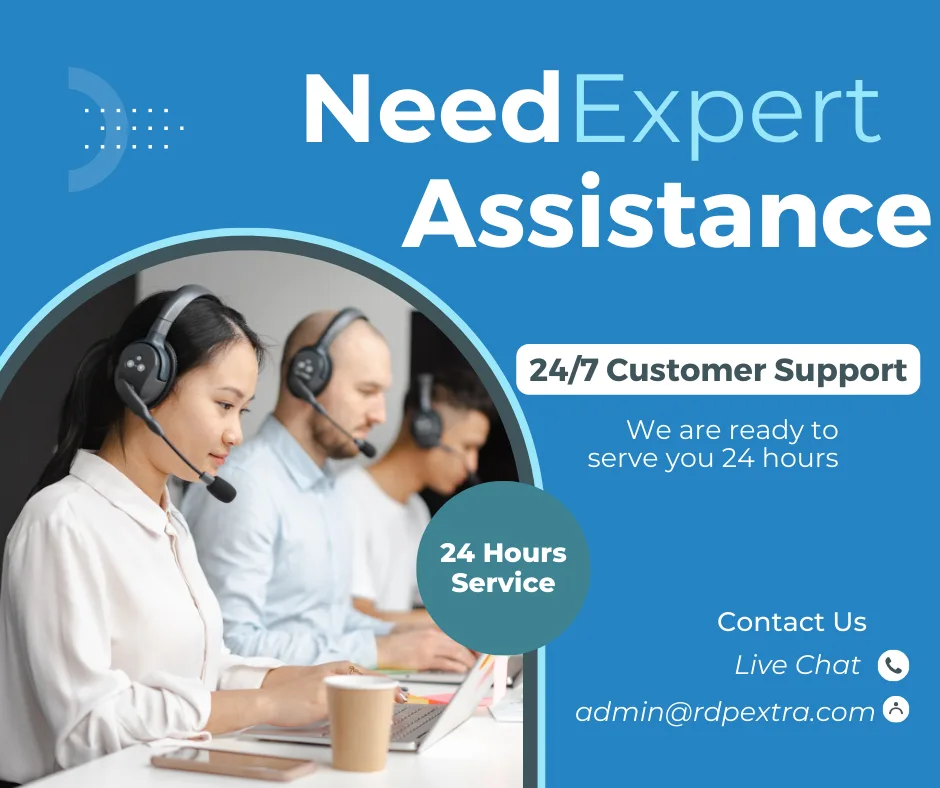
At RDPextra, we prioritize reliable and handy customer service for our valued clients. That’s why we provide spherical-the-clock assistance, making sure help is to be had whenever you want it, day or night.
Our dedicated guide team consists of knowledgeable specialists dedicated to directly addressing your inquiries, resolving troubles, and providing personalized assistance tailor-made in your specific desires. Whether you have got questions about our offerings, stumble upon technical problems, or need guidance to optimize your RDP enjoy, our specialists are right here to assist you.
We highly appreciate the kind and stellar feedback we receive from our customers. Delivering the best is our goal!
RDPextra stands out as the top choice for purchasing
Residential Verizon Rotating IP RDP
Introducing RDPextra’s Residential Verizon Rotating IP RDP, designed to provide seamless far flung computer experiences. Our Residential Verizon Rotating IP RDP is available in flexible intervals and customizable pace alternatives to cater to numerous wishes. You can pick out from a couple of configurations with exceptional speeds and prices to fit your necessities. Our devoted support group is available 24/7 to assist you.
Please ensure you lower back up your vital documents on the RDP.
Prohibited Activities: Scanning, spamming, scamming, phishing, internet-crawling, illegal activities, mining, brute-force assaults, community assaults, converting MAC addresses, putting in VPNs, or developing additional customers at the RDP are strictly prohibited.
Choose RDPextra’s Residential Verizon Rotating IP RDP for a dependable, excessive-performance remote computer answer tailor-made to your wishes.
Designed and assembled in-house with the aid of our expert group, RDPextra’s Residential Verizon Rotating IP RDP offerings install on a resilient and rather available infrastructure, offering lightning-rapid bandwidth speeds. Customize your setup to meet your particular wishes and revel in the electricity and flexibility required to handle your most ambitious IT projects. Explore our high-performance servers to locate the quality pricing and technical options to be had.
Benefits for Individuals and Businesses Choosing an inexpensive Residential Verizon Rotating IP RDP from RDPextra provides severa advantages for both individuals and groups. For far off get entry to and computing, a cost-effective Residential Verizon Rotating IP RDP offers enormous benefits over traditional or slower solutions. Here are some key benefits:
Based on the modern day era, our Residential Verizon Rotating IP RDP servers offer high overall performance, best for compute-intensive workloads together with gaming, massive information control, and video processing tasks. RDPextra servers are designed, assembled, and maintained with the aid of our teams, presenting optimized configurations for all of your tasks.
Our bendy offerings let you effortlessly reply to your customers’ needs. Increase processing energy, upload more storage, or trade the available RAM size as required. Additionally, you may deploy a garage server from our range or select cost-effective dedicated servers for refurbished server hardware with the great charge-to-performance ratio.
Your essential commercial enterprise records is protected by using modern day security capabilities, designed to combat superior threats. RDPextra services and datacenters undertake security-by using-design ideas to fulfill your maximum rigorous protection and privacy desires. Anti-DDoS safety is covered as trendy to protect towards attacks of any size or period.
With RDPextra’s Residential Verizon Rotating IP RDP services, your IT setup continues up with the ever-converting desires of your enterprise. These scalable servers supply a reliable, technical platform for all of your commercial enterprise packages, allowing assets to be added on an as-needed foundation. You can also interconnect your servers with other RDPextra answers, including Hosted Private Cloud and Public Cloud instances.
Opting for a fee-effective Residential Verizon Rotating IP RDP ensures a higher stage of safety in comparison to different options. The strong infrastructure is regularly associated with sturdy safety protocols, making it much less possibly to be centered through cyber threats including hacking and facts breaches. This brought layer of protection enables defend touchy data and gives peace of mind for clients.
Residential Verizon Rotating IP RDP-based IPs generally tend to have better reputations in comparison to global or business IPs, as they’re often associated with reliable and valid assets. This may be in particular useful for agencies engaged in activities consisting of email advertising and marketing or web scraping, wherein IP recognition performs a considerable function in fulfillment quotes and deliverability.
Using a Residential Verizon Rotating IP RDP-primarily based IP with an RDPextra RDP makes it simpler to comply with strict regulatory requirements. These IPs are designed to meet excessive compliance requirements, making sure that your facts stays stable and guarded. Industry-precise hints are met with more ease whilst the usage of a Residential Verizon Rotating IP RDP, permitting you to cognizance in your middle operations without traumatic about compliance issues.
Commercial IP stages are greater liable to being blacklisted via web sites and on line offerings due to their association with various users. Compared to different alternatives, Residential Verizon Rotating IP RDP-based IPs are less in all likelihood to trigger security features or anti-bot mechanisms, lowering the hazard of being blocked or banned whilst getting access to on-line sources or appearing computerized responsibilities.
With a price range-pleasant Residential Verizon Rotating IP RDP users can resultseasily scale sources up or down as wanted. Whether increasing server capacity at some point of peak durations or downsizing to manage expenses at some stage in quieter times, these answers provide scalability to successfully meet evolving business needs.
Despite the preliminary funding required, an cheap Residential Verizon Rotating IP RDP can be fee-powerful ultimately, mainly for agencies with regular far flung access wishes. By fending off the restrictions and extra prices related to slower or industrial solutions, companies can obtain higher price for their funding over the years.
Choose RDPextra on your Residential Verizon Rotating IP RDP and enjoy unheard of performance, innovation, flexibility, protection, scalability, and transparency. Investing in a low-value Residential Verizon Rotating IP RDP can considerably beautify your faraway get right of entry to competencies, imparting a stable, fast, and reliable solution tailor-made to fulfill the needs of cutting-edge businesses.
$85.00/mo
$85.00/mo
$85.00/mo
Residential Verizon Rotating IP RDP is a Remote Desktop service that assigns a Verizon residential IPv4 address to your RDP session and periodically rotates that residential IP from a provider pool. It makes traffic look like typical home-ISP traffic rather than a data-center, reducing automated blocking and enabling geo-specific access.
Rotation uses a provider’s pool of real ISP (Verizon) addresses and swaps the outbound IP either per session or at set intervals. Each request or new session can appear from a different residential IP, which helps avoid IP reputation blocks and maintains “freshness” for targeted tasks. Rotation methods vary by vendor.
Key benefits: lower block rates vs data-center IPs, US residential geolocation, better success for survey/dating/site verification workflows, and improved anonymity for some automation tasks. Performance and verification claims vary by provider and plan; test before scaling.
Rotating residential RDP cycles through live ISP addresses; static residential keeps one home ISP address; datacenter RDP uses non-ISP IPs (fast but commonly blocked). Rotation helps evade reputation-based filters; static is simpler for persistent sessions; datacenter is cheapest/fastest but most likely to be flagged.
Common uses: survey and market-research profiles, dating/account verification, localized content testing, ad verification, and some scraping tasks that require residential-appearing IPs. Avoid use that violates site terms or local laws. Success depends on provider IP freshness and session hygiene.
Using residential IPs is legal, but compliance depends on what you do with them. Actions that violate a site’s Terms of Service, privacy laws, or that are fraudulent are not legal. Always review provider terms, target site policies, and local regulations before automated or sensitive tasks.
Performance depends on provider network and plan (many vendors advertise 1 Gbps ports and low latency for USA Verizon endpoints). Real-world speed varies by plan, server load, and physical routing; run an independent speed/latency test from the RDP session before committing.
Connect to the RDP, open a browser, and visit an IP lookup service (for example, ipinfo.io or similar). The lookup will show the public IP, ASN and ISP name (e.g., Verizon). For programmatic checks use IP geolocation APIs to confirm ASN/ISP and city.
Rotation frequency varies by provider: some rotate per new session, some per request, and some on a timed interval (minutes/hours). A few vendors offer session-sticky options or rotation controls in their panel. Confirm rotation policy before buying if frequency matters for your workflow.
Many providers market “dating/survey verified” IPs, and rotating residential addresses often increase success rates for these checks. However, verification success also depends on device fingerprints, cookies, and behavioral signals — IP alone isn’t a guarantee. Test with a small sample before scaling.
Look for fresh/frequently rotated IP pools, explicit Verizon/ISP attribution, admin access options, clear rotation policies, speed guarantees, support SLA, and honest logging/privacy terms. Verify sample IPs, test target sites, and prefer providers that disclose ASN/ISP provenance.
Blocks happen for poor IP reputation, repeated automated patterns, or combined identifier signals (cookies, device fingerprint). Fixes: request fresh IPs, throttle requests, clear browser state, use session isolation, and follow site rate limits. If the provider supports it, use IP rotation with session-stickiness for authenticated workflows.
Security depends on provider controls: admin access, strong authentication, provider-side isolation, encrypted RDP channels, and no-log policies. For sensitive data, require multi-factor authentication, limit software exposure, and confirm the vendor’s infrastructure and security practices before use.
Typical steps: purchase plan, receive RDP credentials and a login IP, connect with Microsoft Remote Desktop (or other RDP client), verify public IP via an IP lookup, then configure session settings (firewall, software, credentials). Follow provider setup docs for rotation or panel controls.
Pricing varies by resources and vendor. Examples from market listings show monthly plans commonly in the $30–$80 range for single-IP rotating residential Verizon plans with different CPU/RAM/storage tiers and bandwidth. Expect higher prices for guaranteed fresh IPs and admin access.