

Remote access is now a big part of how people work and manage systems. You may handle a VPS, run apps from another place, or work from home. In each case, you need a tool that is fast, reliable, and smooth. This is where Streaming RDP stands out.
Traditional remote desktop tools were built for basic access and admin tasks. They work well for simple jobs. But they often fall short on heavy tasks like gaming, video editing, or design work. Lag, poor graphics, and slow response can make the experience frustrating.
Streaming RDP solves these problems by focusing on speed and real-time use. It gives you a smooth remote desktop that feels almost like a local machine. This makes it a strong choice for both individuals and businesses that want efficiency and flexibility.
What is Streaming RDP?
Streaming RDP is an advanced form of traditional remote desktop technology. It puts high-quality streaming and low latency first. It does more than give you access to a system. It keeps everything running smoothly, even apps that use a lot of graphics.
In simple terms, it streams the desktop from a remote server to your device in real time. This includes apps, videos, and even complex rendering tasks. The result is a fast, responsive experience. You do not need strong hardware on your own device.
Standard RDP can struggle with delays and weak graphics support. Streaming RDP is tuned for demanding work. It is often used in gaming, media production, development, and remote team work.
How Streaming RDP Works
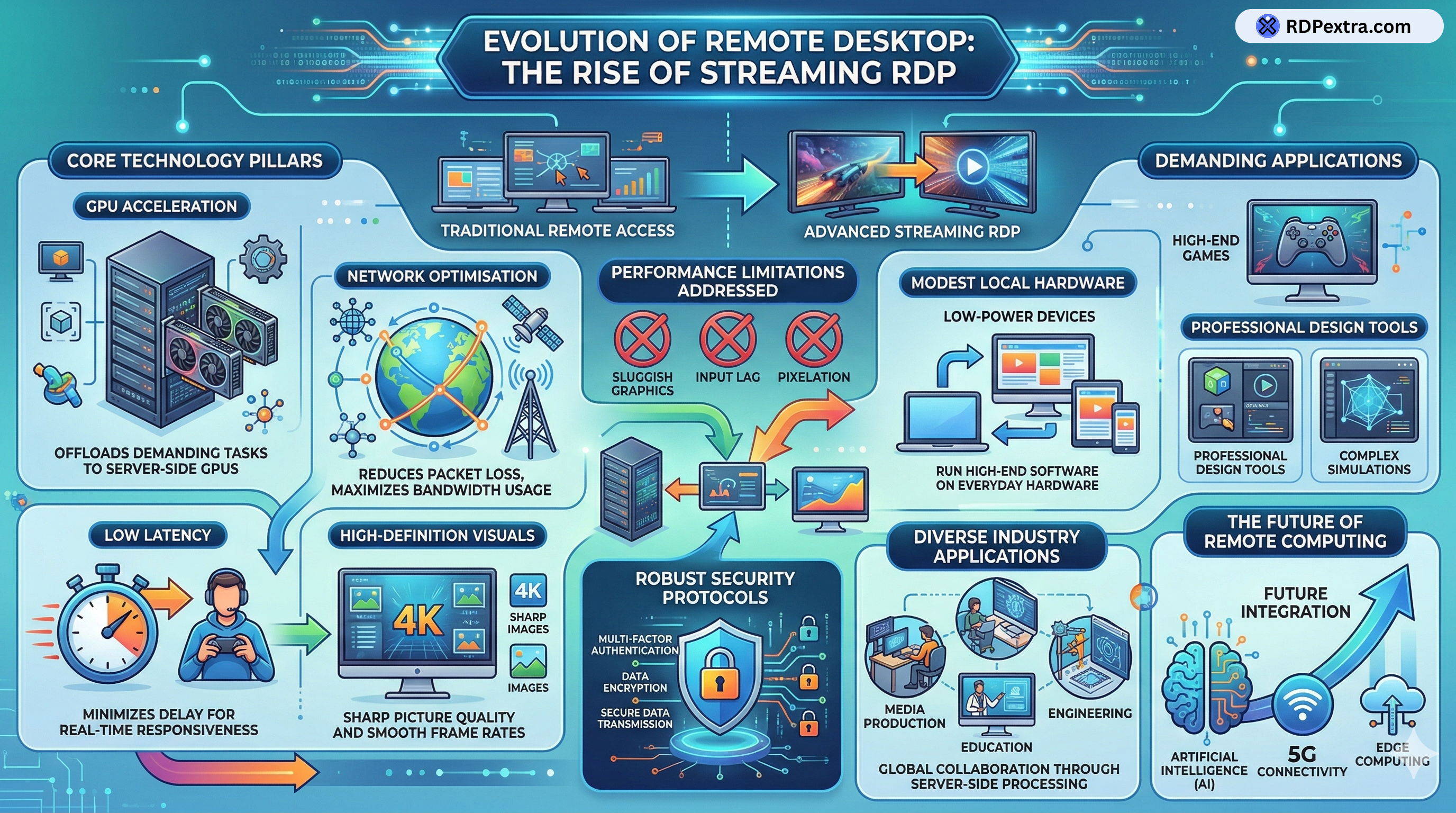
Streaming RDP combines tuned hardware, advanced software protocols, and efficient networking. Each part helps deliver a smooth experience.
Network Optimization
A well-tuned network is key to lower latency. Streaming RDP uses smart routing and fast data transfer. This keeps talk between the server and the user quick.
GPU Acceleration
One big advantage is GPU integration. Graphics processing units handle rendering tasks. This allows high-definition visuals and smooth performance, even for heavy apps.
Bandwidth Management
Streaming RDP manages bandwidth with care. It sends the most important data first and cuts extra load. This keeps the connection stable, even on a moderate internet link.
Server-Side Power
The remote servers have strong hardware. They process tasks and send the result to your device. You do not need a high-end local system.
Advanced Protocols
Modern streaming and compression methods shrink data without hurting quality. This means faster transfer and better performance.
Key Features of Streaming RDP
Streaming RDP has several features that suit modern remote work.
- Adaptive streaming that adjusts quality to network conditions
- Low latency for real-time response
- High-definition graphics powered by GPU acceleration
- Works on desktops, tablets, and smartphones
- Smart use of resources for stable performance
- Encrypted links for secure data transfer
These features give users a steady, smooth experience on any device and in any place.
Security in Streaming RDP
Security is a major concern when you access systems remotely. Streaming RDP deals with this through many layers of protection.
Encryption protocols such as SSL and TLS protect data in transit. This stops others from reading private information. Multi-factor authentication adds another layer by checking who the user is.
Access control limits permissions by role, which blocks unauthorized actions. Network segmentation adds more safety. It keeps traffic apart and lowers exposure.
Regular updates and patches fix weak points and keep the system secure. Monitoring tools track activity and spot unusual behavior. Logs help with audits and troubleshooting.
These measures make Streaming RDP a reliable option for businesses that handle sensitive data.
Advantages of Streaming RDP
Streaming RDP offers several benefits over traditional remote desktop tools.
One big advantage is a better user experience. The interface is smooth, responsive, and clear. This makes demanding tasks easier. Low latency means actions happen in real time, with no clear delay.
High-quality graphics suit fields like design, video editing, and gaming. Users can run heavy apps without worrying about slow speed.
Flexibility is another key benefit. You can reach your system from anywhere on many devices. This is ideal for remote teams and freelancers.
It also cuts hardware costs. The server does the processing, so users do not need costly local machines. This saves money for businesses.
Streaming RDP also supports teamwork. Many users can reach and work on shared resources. This boosts productivity.
Scalability lets businesses adjust resources to demand. This makes growth easier to manage.
Real-World Use Cases
Many industries use Streaming RDP for its speed and flexibility.
Gaming
Cloud gaming platforms rely on streaming RDP for high-quality play. Players can run demanding games without strong hardware. Remote servers do all the work.
Media Production
Video editors and graphic designers use Streaming RDP to reach powerful tools remotely. Teams can work on projects from different places without losing quality.
Education
Schools and online courses use it to give access to advanced tools and virtual labs. Students can use simulations and software that would otherwise need high-end systems.
Architecture and Design
Architects and designers use Streaming RDP for 3D modeling and rendering. It allows real-time teamwork and faster projects.
Business Operations
Companies use Streaming RDP for secure remote work. Staff can reach company systems from anywhere. Security and speed stay strong.
These cases show how Streaming RDP improves productivity, access, and overall efficiency.
Future of Streaming RDP
The future of this technology looks bright. New advances keep improving speed and ease of use.
AR and VR integration will create more immersive remote experiences. Users will be able to interact with virtual spaces in real time. This will make remote work and teamwork more engaging.
The rollout of 5G networks will cut latency a lot. Remote access will be faster and more reliable. Edge computing will help more by processing data closer to the user.
Artificial intelligence will play a key role in streaming quality. It will adjust settings on its own, based on user habits and network conditions. This will keep the experience steady.
Security will keep improving with better threat detection and stronger encryption. Hybrid cloud setups will add flexibility by mixing local and cloud systems.
As these advances continue, remote desktop streaming will become even more powerful and widely used.
Conclusion
Streaming RDP has changed how remote access works. It delivers a fast, smooth, and high-quality experience. It overcomes the limits of traditional RDP and supports modern workflows that need speed and flexibility.
From gaming and design to business and education, it is a reliable way to reach systems remotely. Low latency, strong security, and scalability make it right for both individuals and organizations.
As technology grows, Streaming RDP will play an even bigger role in the future of remote computing.
Buy Streaming RDP from RDPextra
RDPextra offers high-performance remote desktop services for users who need speed, reliability, and security.
Its infrastructure is tuned for smooth performance, so apps run without lag. Advanced security measures protect user data and keep it private.
It provides flexible plans that you can adapt to your needs. Whether you are a gamer, a developer, or a business user, you can find a suitable plan.
Reliable support helps solve any issue quickly, so you can focus on your work.
If you want a powerful and secure remote access option, RDPextra is a strong choice.
