

Written by Kevin Allen Ethan - compiled from live keyword-demand data, a read of the current top-ranking comparison pages for Chrome Remote Desktop vs RDP, and 20 verified primary sources (Google, Microsoft, NIST, CISA, NCSC, ENISA, the Chromium Project). Research compiled September 2026.
A lot of people search for "Google RDP" expecting a product Google actually sells. It doesn't exist under that name - what they usually mean is Chrome Remote Desktop (CRD), Google's free tool for reaching a computer from another device through the Chrome browser. It's genuinely useful, but it is not RDP, doesn't run on the RDP protocol, and isn't a substitute for admin-level Windows access when a task actually needs one.
This page untangles the two: what Chrome Remote Desktop actually is, where it's genuinely good, where its real limitations sit (not vague ones - specific, sourced ones), and how to tell when you've outgrown it and need a real RDP-hosted Windows server instead.
What Is Chrome Remote Desktop (aka "Google Remote Desktop")?
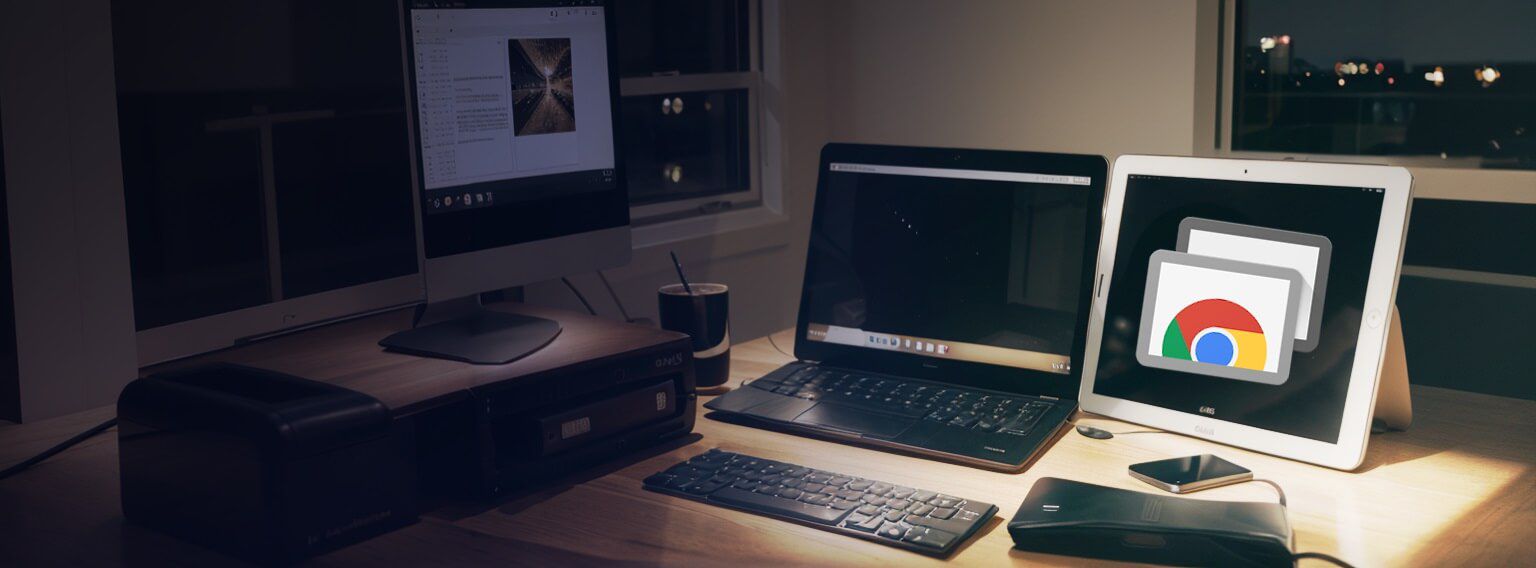
Chrome Remote Desktop is a free remote-access tool built by Google that runs through the Chrome browser and a companion extension.[1][2] It uses Chromium's own network stack to establish the connection between devices[3] - not Microsoft's Remote Desktop Protocol. You install it from the Chrome Web Store[4] or get the companion app from Google Play,[5] pair two devices to the same Google account, and connect using either a persistent PIN (for your own devices) or a one-time 12-digit code (for giving someone else access to yours).
It's genuinely platform-agnostic - Windows, macOS, Linux, and Chrome OS on the host side, with Android and iOS on the client side - which is more cross-platform reach than most paid remote-access tools offer.
Chrome Remote Desktop vs RDP: The Actual Differences
| Chrome Remote Desktop | RDP (hosted on a real server) | |
|---|---|---|
| What it is | A Google product/service | Microsoft's connection protocol[8] - what a hosting provider's server runs |
| Access to | Your own existing computer, remotely | A dedicated Windows server you're renting, with admin rights |
| Setup | Chrome extension + Google account, minutes | Provider provisions the server; RDP client built into Windows |
| Concurrent users | One session at a time, no fleet management | Multiple concurrent users possible with RDS licensing[9] |
| Admin/root access | Whatever the host PC already allows - no elevated install rights of its own | Full administrator access on your own rented server |
| Dedicated resources | None - runs on whatever hardware you already own | Dedicated CPU/RAM/bandwidth for 24/7 workloads |
| Cost | Free | Paid - you're renting a server, not accessing one you own |
Bottom line: CRD gets you back into a computer you already own. RDP hosting gets you a new computer, with admin rights, that lives somewhere else.
Is Chrome Remote Desktop Safe? What It Actually Gets Right and Wrong
Chrome Remote Desktop does the basics correctly: all session traffic is encrypted, a PIN is required to connect, and Google generates a fresh verification code for each connection.[1] The host machine also notifies you whenever a session starts or ends. For casual, personal use, that's a reasonable baseline.
Where it falls short for business use is specific, not vague:
- No MFA enforcement of its own. Security depends entirely on your Google account's own settings - CRD has no independent multi-factor requirement, so if 2-Step Verification isn't turned on at the account level,[6] there's nothing else protecting the connection. NIST's digital identity guidelines treat memorized-secret-only authentication as the weakest tier for exactly this reason.[7]
- No centralized access logging or admin console. There's no dashboard showing who connected to what, when - a real gap for any business trying to audit remote access.
- No IP allowlisting. You can't restrict connections to a specific network or range the way you can on a properly configured RDP server.
- Single point of failure: your Google account. Compromise the account and every paired device is reachable.
- A 30-minute reconfirmation prompt in attended Remote Support sessions, which interrupts longer troubleshooting or support work.
For context, RDP itself has the opposite reputation problem: it supports strong encryption and Network Level Authentication, but exposed, poorly configured RDP endpoints are a well-documented ransomware entry point[13][14] - which is exactly why CISA,[13] the UK's NCSC,[16] and ENISA[17] all publish guidance on locking it down (NLA, MFA, IP restriction, patching). The difference is that a properly hosted RDP server gives you the controls to fix that; Chrome Remote Desktop mostly doesn't give you those controls at all.
Other Real Limitations of Chrome Remote Desktop
- No direct file transfer between devices - you need a separate service like Google Drive to move files.
- Single-monitor view only - no multi-monitor support, so a second screen's content is invisible until you switch to it.
- No remote printing.
- Mobile client is workable but limited - touch controls work, but precision tasks and keyboard shortcuts translate poorly to a phone screen.
- No dedicated resources - performance is whatever the host PC can spare, which is a problem for CPU/GPU-heavy or always-on workloads (trading bots, streaming, rendering, automation).
When Chrome Remote Desktop Is Enough - and When It Isn't
Is CRD Enough for You? - Get an Answer in 3 Taps
Chrome Remote Desktop Alternatives Worth Knowing
If CRD's limitations are the issue but you still don't need a full dedicated server, paid tools like TeamViewer, AnyDesk, and Splashtop sit between CRD and RDP hosting - they add file transfer, multi-monitor support, and centralized admin consoles, at a subscription cost. If the actual need is admin rights, dedicated resources, or an unattended 24/7 workload, none of those close that gap either - only a real server does, which is where RDP hosting fits: Admin RDP for full administrator access, or a dedicated server for resource-heavy, always-on tasks.
Frequently Asked Questions
Is Chrome Remote Desktop the same as RDP?
No. RDP (Remote Desktop Protocol) is Microsoft's connection protocol, built into Windows.[8] Chrome Remote Desktop is a separate Google product that uses its own connection method through the Chrome browser[3] - the two aren't interchangeable, and "Google RDP" isn't a real product name.
Is Chrome Remote Desktop safe for business use?
It's safe for casual, low-stakes use - sessions are encrypted and PIN-protected.[1] For business use, the gaps are real: no independent MFA enforcement,[7] no access logging, no IP restriction, and your Google account becomes a single point of failure for every paired device.
Is Chrome Remote Desktop discontinued?
No, it's still an actively maintained Google product, available through the Chrome Web Store[4] and Google Play.[5]
What's replacing RDP?
Nothing is replacing RDP outright - it remains the basis of Windows' own Remote Desktop Services.[9] Browser-based tools like Chrome Remote Desktop have grown for lighter, personal use cases, but for full Windows admin access on rented infrastructure, RDP-based hosting is still the standard.
Can I use Chrome Remote Desktop for a business server?
You can point it at a server you already have, but it doesn't provision one for you and has no admin-rights or multi-user model of its own. If the goal is a new Windows server with full admin access, that's what RDP hosting is for, not CRD.
Conclusion
Chrome Remote Desktop and RDP solve different problems. CRD is a free, well-encrypted way to reach a computer you already own - good for personal use and occasional support, with real gaps in MFA enforcement, access control, and multi-user handling that matter once the use case turns into business-critical work. RDP hosting is a rented server with full admin rights, dedicated resources, and the ability to run unattended 24/7 - what you actually need for trading, streaming, automation, or multi-user access.
If the quiz above pointed you toward real RDP hosting, RDPextra runs full admin-access RDP plans and dedicated servers for exactly that gap.
References
- Google Support. "Set up Remote Desktop." support.google.com. Accessed September 2026.
- Wikipedia. "Chrome Remote Desktop." en.wikipedia.org. Accessed September 2026.
- The Chromium Projects. "Network Stack" design documentation. chromium.org. Accessed September 2026.
- Chrome Web Store. "Chrome Remote Desktop" extension listing. chromewebstore.google.com. Accessed September 2026.
- Google Play. "Chrome Remote Desktop" Android app listing. play.google.com. Accessed September 2026.
- Google Account Help. "Use 2-Step Verification." support.google.com. Accessed September 2026.
- NIST. "SP 800-63B: Digital Identity Guidelines - Authentication and Lifecycle Management." pages.nist.gov. Accessed September 2026.
- Microsoft Learn. "Understanding Remote Desktop Protocol (RDP)." learn.microsoft.com. Accessed September 2026.
- Microsoft Learn. "Remote Desktop Services overview in Windows Server." learn.microsoft.com. Accessed September 2026.
- Microsoft Learn. "[MS-RDPBCGR]: Remote Desktop Protocol: Basic Connectivity and Graphics Remoting." learn.microsoft.com. Accessed September 2026.
- Wikipedia. "Remote Desktop Protocol." en.wikipedia.org. Accessed September 2026.
- Fortinet. "What is Remote Desktop Protocol? How does RDP work?" fortinet.com. Accessed September 2026.
- Cloudflare. "What are the security risks of RDP?" cloudflare.com. Accessed September 2026.
- CISA. "Weak Security Controls and Practices Routinely Exploited for Initial Access (AA22-137A)." cisa.gov. Accessed September 2026.
- CISA. "#StopRansomware Guide." cisa.gov. Accessed September 2026.
- CISA. "Guide to Securing Remote Access Software." cisa.gov. Accessed September 2026.
- NCSC (UK). "Mitigating malware and ransomware attacks." ncsc.gov.uk. Accessed September 2026.
- ENISA. "Threat Landscape." enisa.europa.eu. Accessed September 2026.
- NIST. "SP 800-46 Rev. 2: Guide to Enterprise Telework, Remote Access, and Bring Your Own Device (BYOD) Security." csrc.nist.gov. Accessed September 2026.
- Microsoft Learn. "Allow access to your PC using Remote Desktop / Network Level Authentication requirements." learn.microsoft.com. Accessed September 2026.
